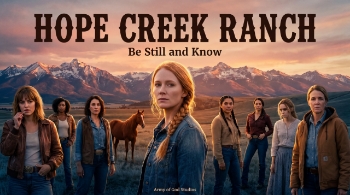
HOPE CREEK RANCH
LOGLINE
At a remote Montana correctional ranch where incarcerated women rehabilitate through horse training, six hardened and broken bunkmates find their world upended when a devoutly Christian new arrival — serving time for the drunk-driving death of her best friend — arrives carrying nothing but a Bible, a violin, and an unshakable faith that slowly convicts, comforts, and transforms everyone in her path.
SYNOPSIS
Nestled in the shadow of Glacier National Park, Hope Creek Ranch is unlike any other correctional facility — fifty incarcerated women rebuild their lives not through punishment, but through the patient, demanding work of caring for horses: feeding, grooming, mucking stalls, shoeing, and riding animals as broken and distrustful as they are. Under the watch of Warden Caroline Hutchins and her rotating crew of guards-turned-ranch-hands, the camp runs on an unspoken belief that healing an animal and healing a person aren't so different — both require patience, trust, and someone willing to stay.
The series centers on Bunkhouse Seven, home to six women serving vastly different sentences for vastly different crimes: Dess, the steady, horse-whispering matriarch doing time for defending herself against an abusive husband; Tanya, a sharp-tongued con artist who trusts no one and performs constantly; Frankie, volatile and fiercely loyal, carrying guilt she won't name; Keisha, the quick-witted comic relief masking deep abandonment wounds; Rosa, a teenager too innocent and easily led, still learning to find her own voice; and Birdie, fragile and newly sober, finding unexpected peace in the company of the horses.
Their fragile equilibrium shifts when Danica Sokol — a 24-year-old former beauty queen serving three years for the vehicular homicide of her lifelong best friend — arrives as Bunkhouse Seven's seventh bunkmate. Beautiful, broken, and unflinchingly honest about her own guilt, Danica carries an open, unapologetic relationship with Jesus, a Bible she knows by heart, and a gift for music that catches every woman in the cabin off guard. She doesn't preach from a place of superiority — she preaches from the wreckage of her own worst day. Her presence becomes a mirror, forcing each woman in Bunkhouse Seven to confront the parts of themselves they've buried under bravado, humor, or silence.
Episode by episode, Hope Creek Ranch blends comedy and drama in equal measure — the chaos of six (then seven) women fighting over one bathroom, the unexpected tenderness of a wild filly accepting a human hand, the dark humor that survives even in captivity — alongside genuine wrestling with guilt, redemption, grief, and grace. Through the daily rhythms of barn work, mealtime banter, and late-night bunkhouse confessions, the series explores whether people who have done terrible things can still be loved, still be changed, and still find hope — both from each other, and from something greater than themselves.
At its heart, Hope Creek Ranch is a story about what it means to be green broke — not broken beyond repair, but gentled, slowly, by someone patient enough to wait for trust to come.